Celebrating the Southern Arizona Water Leadership Institute 2025
We believe the future of water is shaped through strengthening the knowledge already existing in communities, especially to address water insecurity and elevate place-based solutions. Through this belief, the Water Leadership Institute in Southern Arizona recruited the next generation of water leaders (ages 18+) to explore water challenges in their communities and reimagine collaborative solutions. This year’s program included a cohort of 37 participants from across the Southern Arizona region and into Sonora, Mexico. Each session was fully bilingual (ENG-ESP) thanks to support from the Language Justice Collective, and took place at a different area along the Santa Cruz River with a host of emerging themes and guest speakers, facilitating a collaborative space for participants to reflect on their relationship to water and solidify their water leadership story.
Our participants explored how past decisions and actions have shaped the current conditions of the Santa Cruz Watershed. Moving through a transboundary river system such as the Santa Cruz River exposed participants to the unique challenges on co-stewardship across Nations, and the possibilities that can arise through collaborative solutions. Participants were guided through the realities of WASH gaps (Water, Sanitation, and Hygiene) and analyzed the connection to environmental justice and equitable water accessibility and security. By the end of the sessions, participants reflected on their personal leadership style, strengths, relationships, and interests, and identified ways to apply their learning to advocate for water justice. The institute took place across 5 sessions between September and December, with each gathering building on the next. Consistent across sessions was the foundational pillars of “Leadership,” “Historical Context,” “Transboundary Resilience,” and “WASH Pathways.”
As a joint symbol of the experience, participants created Zines and art that will be curated into a digital and physical resource as a celebration of water leadership.
-
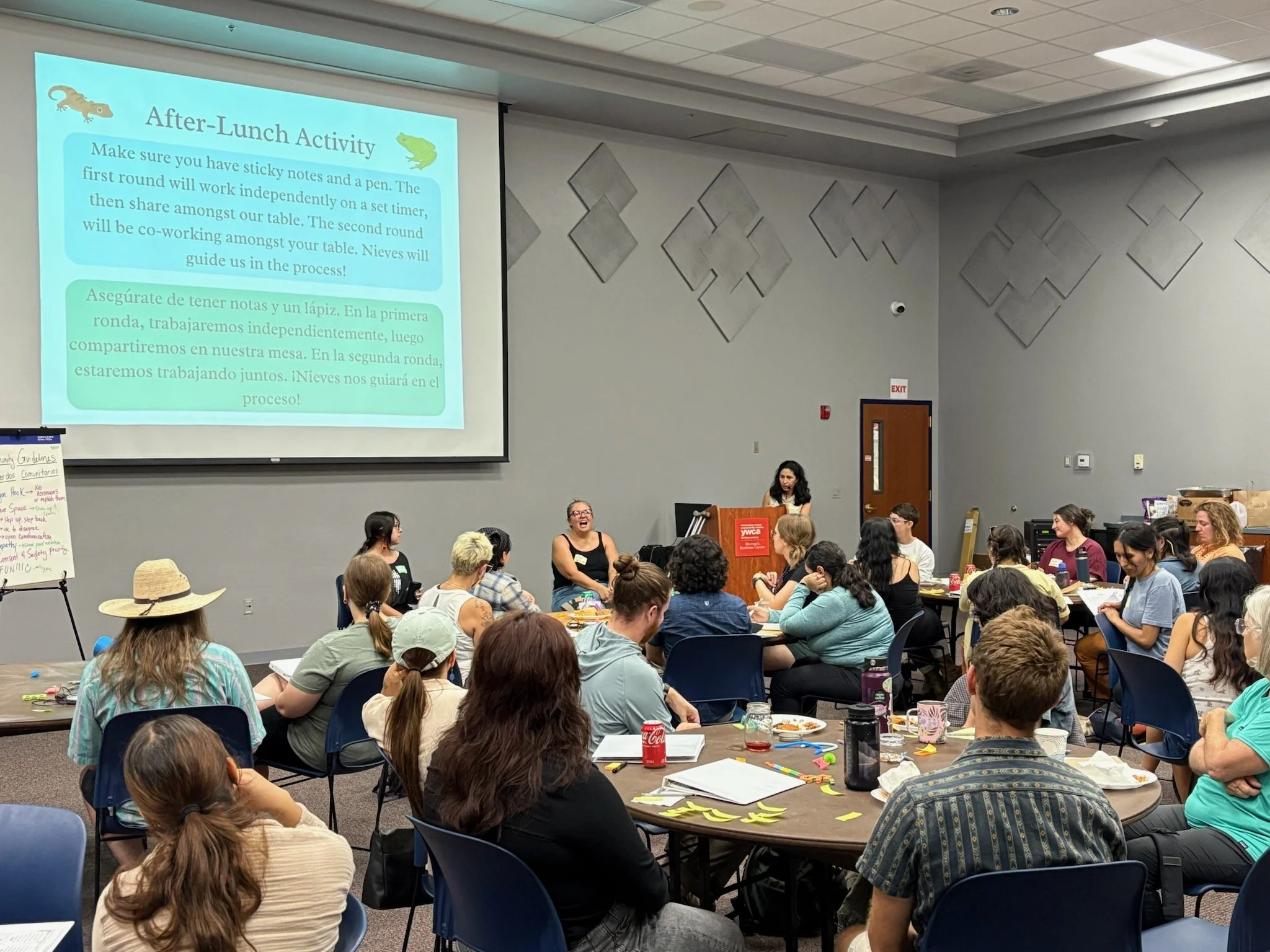
Our first session took place in Tucson, AZ between the YWCA and the Santa Cruz River Heritage Project. To orient ourselves to place, the participants heard from Sra. Josefina Cardenas, a multi-generation resident of the historic Barrio Kroeger Lane at the base of Tucson’s Sentinel Peak along the river wash. She touched on the impacts of urban development and how renewal projects have affected the social and cultural aspects of the Mexican American communities and O’odham neighbors when done without community consent. Her attention to traditions, displacement, and access to shared natural spaces taught the importance of elevating community voices.
Dr. Michael Bogan, a stream ecologist and advocate of the Santa Cruz River, shared how the area’s hydrology and ecosystems have been heavily altered from colonization and in continued industrialization that depleted the groundwater and dried up the river. As a response through passion and community work, the Santa Cruz River Heritage Project aimed to release treated effluent into the riverbed to promote river flow and re-invite native plants and wildlife.
Exploring the connections between environmental degradation and environmental health brought to light the WASH gaps of the area, where Dr. Alisha Vasquez discussed how gender and disability inequality is exacerbated in the area. As a generational resident of the Tucson westside and South Tucson areas, she has first-hand experience on the health impacts from a Superfund Site’s aquifer contamination, leading to high levels of TCE and PFAS exposure and higher rates of cancer and disabilities.
-
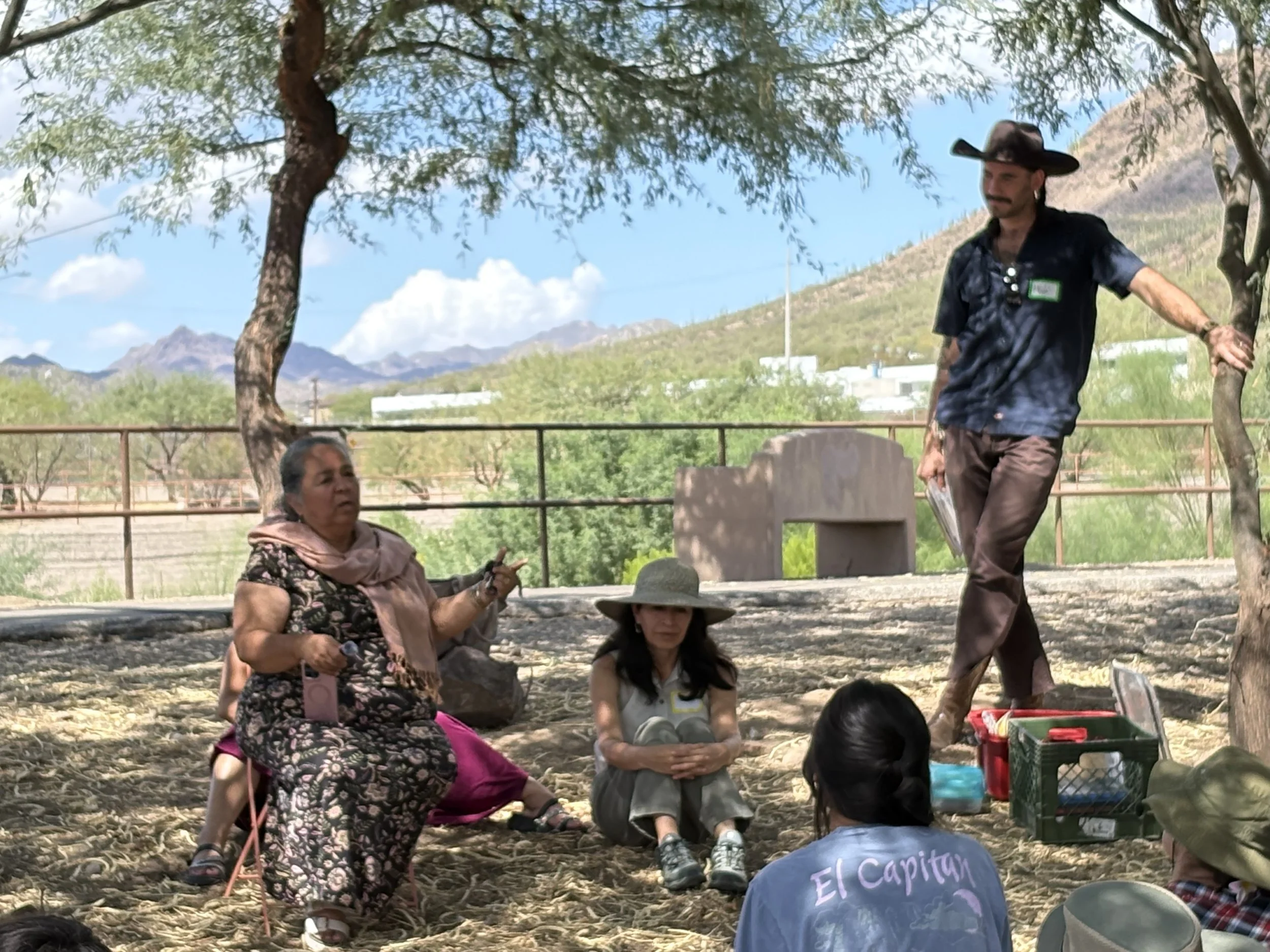
Our second session took place in the San Xavier District of the Tohono O’odham Nation, hearing from Tribal leaders and local community members on the connection between resilience and resistance in the face of water injustice. With David Tenario, the Assistant Supervisor for the San Xavier’s District Natural Resources Department, participants uncovered the historical and legal context of water rights in Southern Arizona. By meeting at the site of the Wa:k Hikdan restoration project, David guided participants on how Tribal sovereignty and ecological knowledge aided in the restoration of that portion of the Santa Cruz River.
In reflecting on the confluence within the context of the land, participants then began to expand on how to tell and cultivate stories and lifeways of resilience, reciprocity, hope and abundance. Local Tucson poet Logan Philips later joined the participants at a venue in the San Xavier District to guide activities on storytelling, poetry, and art to answer the question: “What is my relationship to water?”
-
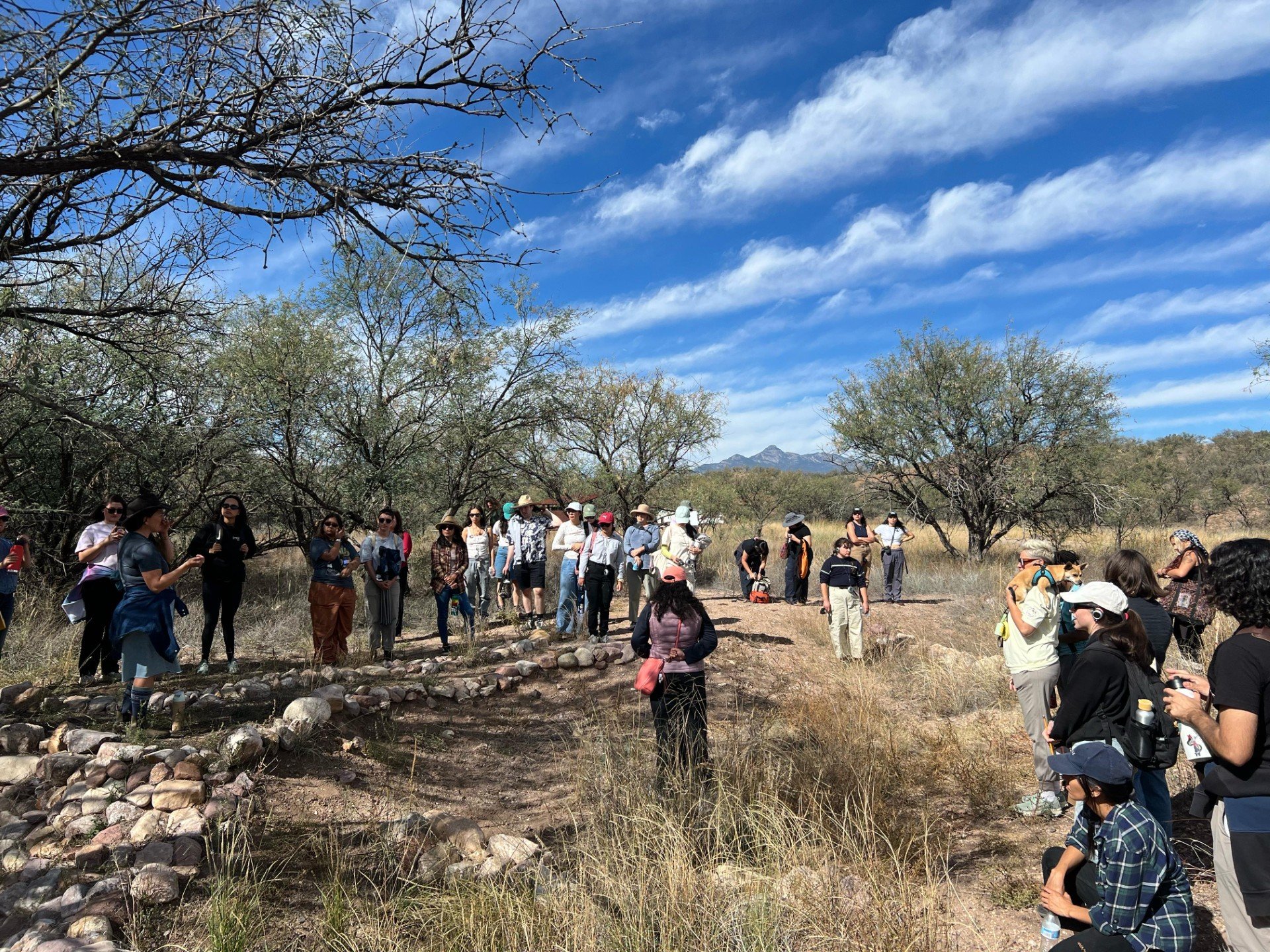
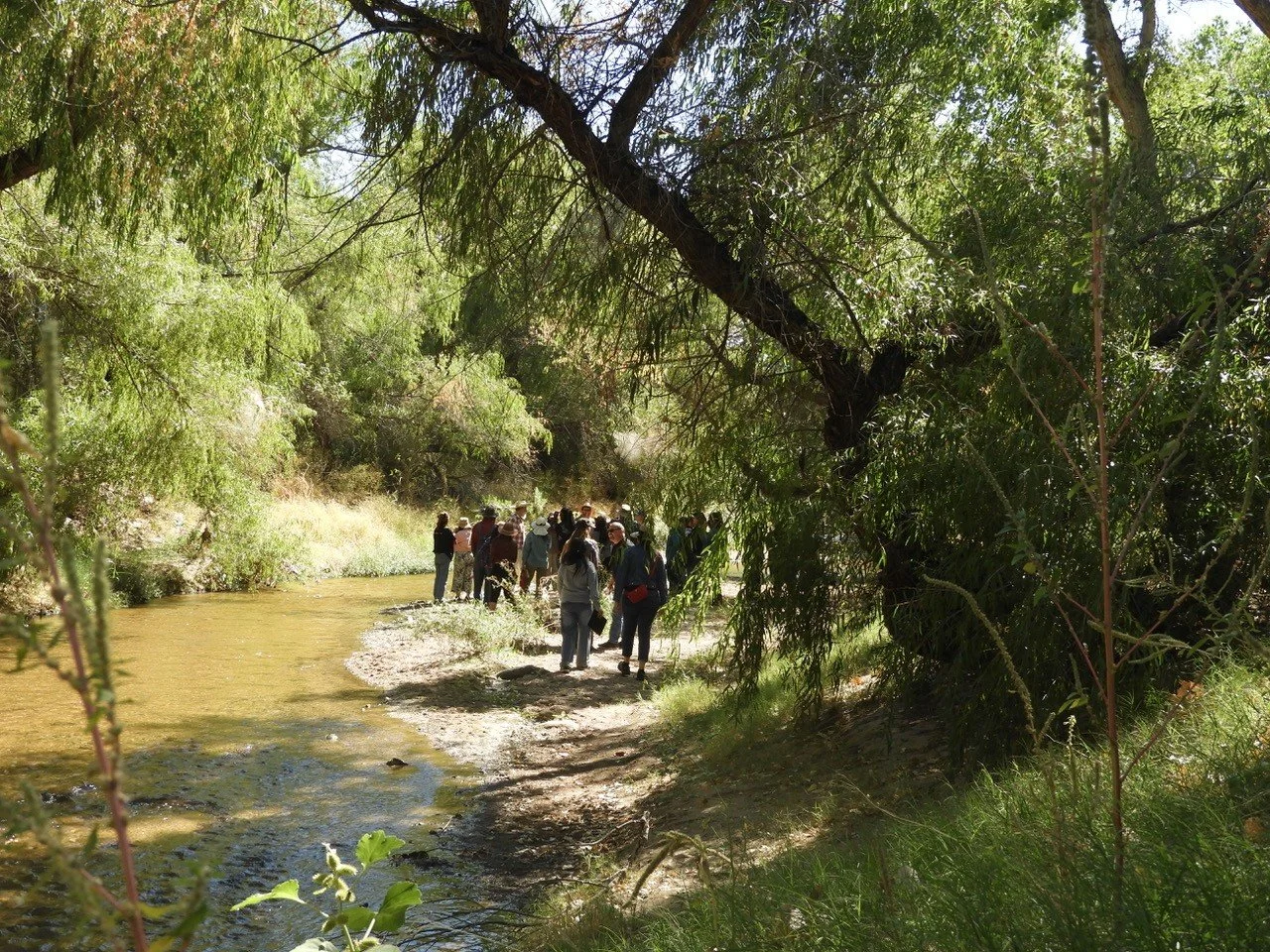
Our third session took place in Tubac, AZ at the Santa Gertrudis Lane on the Santa Cruz River’s path in the historic Anza Trail. Although originally meant to meet at Tumacácori National Historic Park, our cohort adapted to the government shutdown by keeping close to the historical roots of the area and experiencing the science and traditions of the community. Meghan Smart and Mackenzie Moore of the AZ Department of Environmental Quality ked participants through the stakeholder collaboration of water quality management through treatment infrastructure and local monitoring activities. With the help of Ben and Pam, volunteers from the Friends of the Santa Cruz River, participants got hands-on experience in water turbidity testing and trash identification on the river. This experience highlighted the importance of self-driven efforts to seek out volunteer opportunities in community-centered science to deepen their water leadership experience.
The cohort later gathered at a local restaurant in the area to hear from Seth Asusubel, a volunteer Director of the Tubac Nature Center who spoke on the importance of biodiversity stewardship in the advocacy for water. His water leadership story is shaped through his volunteer service in the nature center, but also his use of photography to tell the story of how important biodiversity and water conservation are to each other. When native species disappear or watersheds change, the local community is impacted. Afterwards, participants reflected on their role in present-day water issues through a role-play activity on local WASH issues. Each table of about 8 participants received a case study on either a Data Center Proposal, a Superfund Cleanup Site Project, or a Bi-national Wastewater Treatment Plant Legal Assessment. Participants were randomly assigned characters in the role-play, from government official to rancher to community member to engineer. The case studies allowed participants to embody the region’s trending water concerns to demystify getting involved in the conversations outside of the sessions and in their present communities.
This then segway into a leadership workshop led by Carol Jurdao of the Arizona Water for All (AW4A) Network and Arizona State University. She guided the participants on how to build an agenda for a meeting, defining your audience, proprieties, and time allotted. This skill compliments the next steps for a participant ready to get involved in their communities and organize for a cause important to them. To practice self-direction, some participants chose to explore Tubac’s ANZA Days to immerse themselves in a historical display of the city’s founding that has shaped the water of the area.
-
Our fourth session took place in Patagonia, AZ with the Borderlands Restoration Network (BRN) and some folks from Patagonia Action Resource Alliance (PARA). When participants arrived on site, our partners from the Language Justice Collective Lead an intro activity to ground ourselves in the important difference between language accessibility and language justice. As the cohort represents bi-national and multi-lingual participants, this grounding practice allowed the for the day to move inclusively and with higher participation.
We then heard from Perin McNelis of the Borderlands Restoration Network as they gave us a tour of the Native Seed Barn on site. Learning about the native grasses of the area tied in the importance of community involvement in the environment, as the seed barn plays a major role in preserving and restoring these grasses. The Navajo-Churro sheep came up as a method for getting rid of invasive weeds, especially for the notorious buffelgrass! Perin also mentioned how mining has impacted groundwater levels.
Katherine Barbaree, Director of BRN, then took us to the Wildlife Preserve, where participants learned about the use of one-rock dams, an erosion control method.
Katherine also shared many opportunities to get involved at Borderlands, such as Field Courses, volunteer opportunities, job openings, and subscribing to the newsletter to stay informed.
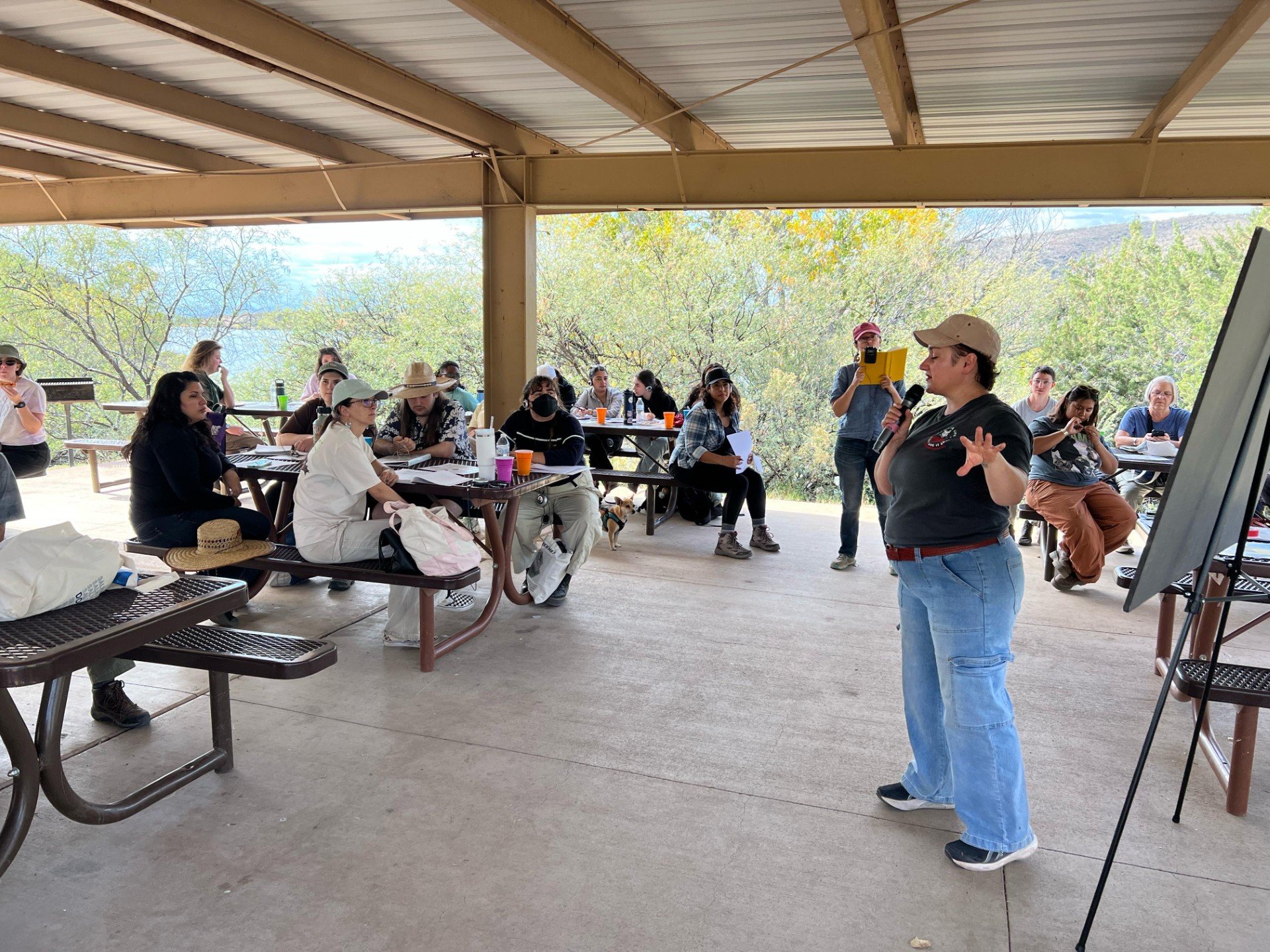
When we left BRN, we gathered ourselves for lunch and reflection at Patagonia Lake State Park. Participants heard Anna Darian of the Patagonia Area Resource Alliance. She took a moment to share her personal water leadership story and helped us explore the impacts of the South32 mine, raising the issue of accountability and transparency in extractive industries. Anna also gave a brief intro to Arizona Water Policy, notably stating that groundwater and surface water are managed separately in the State of Arizona. Her talk resonated with participants as PARA mentioned the need for cross-collaboration to strengthen education and outreach on the impacts of mining and how resources in an area are managed. Through private and public sectors, much can be learned, and movement can be made.
-
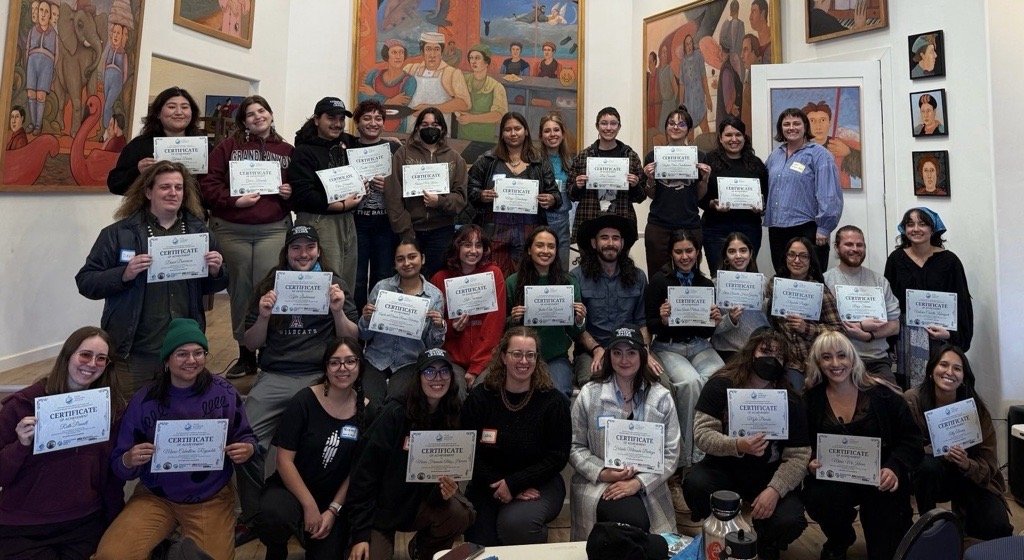
Our fifth and final session celebrated the participants’ graduation from the program and took place at the Wittner Museum on historic Morley Avenue in Nogales, AZ. Two alumni from the previous cohort are from Nogales, so they joined us to lead the current participants through a meditative reflection on gratitude, and later through a reflective exercise on public speaking and using your voice to advance your passion. To orient ourselves to the space, we also heard from Evan, the director of the museum, on the importance of revitalizing Nogales to ensure there are spaces for community to come together in the region.
Participants delved into their day with Joaquin Marruffo and Claudia Gil Anaya from the Nogales / Borderlands region of the AZ Department of Environmental Quality. They offered an in-depth look at the transboundary and international aspects of the Santa Cruz River through hydrological and political challenges. A major drive for the work in the area is informed by the Nogales International Wastewater Treatment Plant, which shapes the relationship between the US and Mexican governments and the International Boundary and Water Commission. To put knowledge into action, participants were guided by Joaquin and Claudia through a role-play activity where each table represented a different stakeholder across the borders of the Santa Cruz River.
For lunch, participants shared a meal with a water leader of their choice, from Ben and Pam of the Friends of the Santa Cruz River, Robin Lucky from the Calabazas Alliance, Anna from PARA, Carol from AW4A, and outdoor education teacher Jordan. This allowed participants to network and stay connected with the leaders of the region.
For the final project, participants created Zines and artistic pieces for a joint anthology that will showcase the personal and mutual reflections in solidifying their water leadership story. Through this project, participants created collages, poems, songs, weavings, and photography to balance the technical professional development with their personal growth in water leadership.
The 2025 Water Leadership Institute in Southern Arizona is made possible through the partnerships between the Environmental Defense Fund, the Arizona Water for All Network under the Arizona Water Innovation Initiative at Arizona State University, Water For People, and Reconciliacion en el Rio Santa Cruz.